🎉 Free Shipping on Orders Over $100 | ✨ New Arrivals Just Added


Genuine Leather vs PU Leather Shoes: Complete Guide

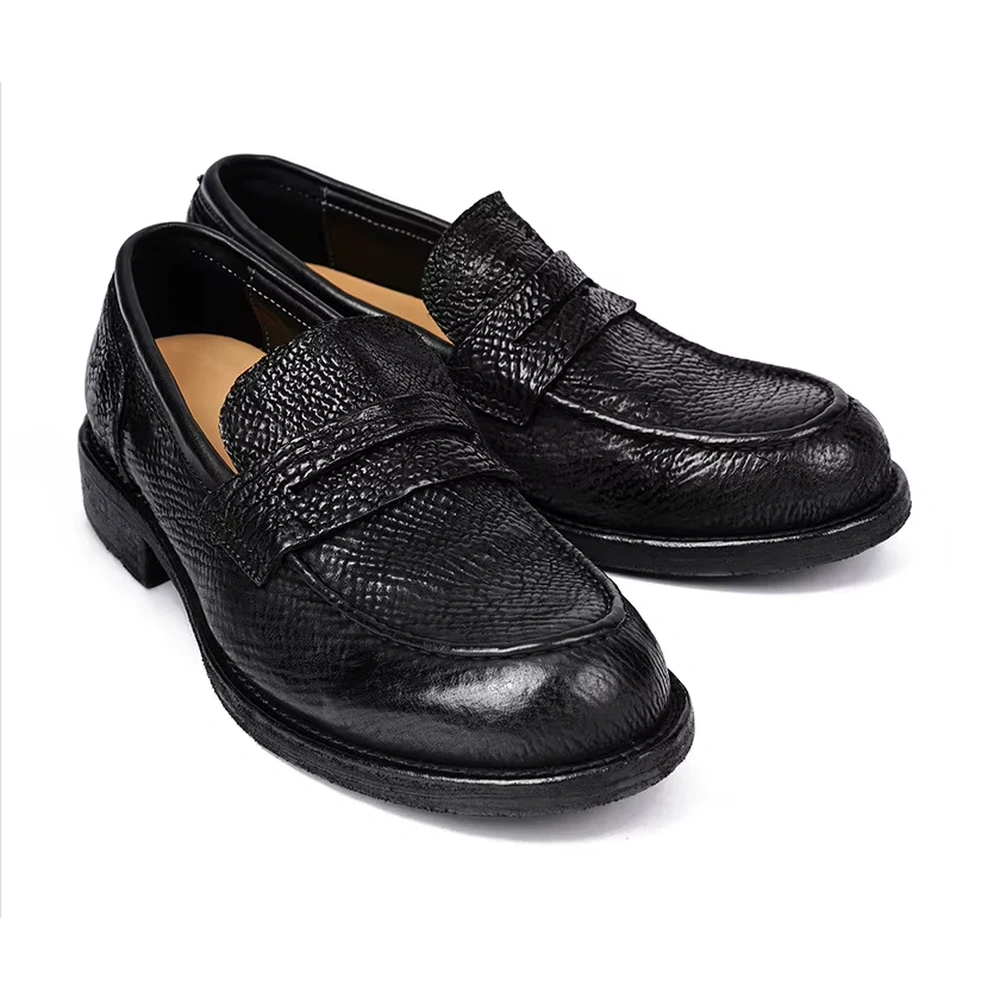
Genuine leather vs PU leather shoes : the complete buyer’s guide
Choosing a pair of leather shoes online should feel exciting. Too often, it turns into a singing game. Product descriptions mix terms like “genuine leather,” “PU leather,” “top-grain,” and “vegan leather” without ever explaining what any of it currently means for your fee, your wallet, or your purchase decision.
This guide cuts through the confusion. Whether you are shopping for tabi sneakers, handcrafted leather boots, or a slim card holder wallet, understanding the difference between gene and PU leather is the single most important thing you can do before clicking “Add to Cart.”
What is genuine leather, exactly?
Genuine leather is made from animal hide – most commonly cowhide, though goat, lamb, and buffalo are also common. The hide is tanned, treated, and finished to produce a durable, breathable material that ages with the wearer.
There are several grades of genuine leather, and they are not equal:
| Grade | Source | Sustainability | Feel | Price range |
|---|---|---|---|---|
| Full-grain leather | Outermost layer of hide, untouched | Excellent – 20+ years | Natural, developings patina | $$$$ |
| Top seed leather | Outer layer, sanded and finished | Very good – 10-15 years | Smooth, uniform | $$$ |
| Genuine leather | Lower layers, heavily processed | Moderate – 2-5 years | Stiff, less fills | $$ |
| Bonded leather | Scraps bonded with adhesive | Poor – 1-3 years | Plastic-like feel | $ |
The term “genuine leather” is legally accurate but commercially misleading. It technically means the product contains real leather, but it refers to one of the lowest-quality grades. A “full-grain leather” shoe will always outperform and outlast a product simply labeled “genuine leather.”
When a shoe brand claims “genuine leather premium,” pay close attention to which grade they currently specify.
What is PU leather and why does it matter?
PU leather (polyurethane leather) is a synthetic material made by coating a fabric base – usually polyester – with a layer of polyurethane. It has nothing to do with animal hide.
PU leather is not inherently a bad material. It has legitimate advantages:
- Lower cost : PU leather products cost significantly less to produce and to buy
- Vegan-friendly : no animal products are used in the manufacturing process
- Uniform appearance : the surface is consistent, with no natural variations
- Easy to clean : spills wipe off quickly without conditioning
Goal PU leather has real limitations that matter for shoes and walls:
- It does not breathe, which means sweaty fee in warmer climates
- It does not develop a patina or improve with age – it simply degrades
- Peeling and cracking typically begin within 2 to 4 years of regular use
- It cannot be reconditioned or polished back to life once it starts to break down
The core issue is not that PU leather exists. The issue is when a product is marketed as “premium handcrafted leather” while the material is currently PU. That gap between exhibition and reality is what drives negative reviews, returns, and loads.
How to tell the difference before you buy
You cannot always feel a material through a screen, but there are binding signals to look for:
Check the product description carefully
A reputable brand will specify the exact material – full-grain, top-grain, or PU leather – on every product page. Vague terms like “leather-like,” “false leather,” “vegan leather,” or simply “leather” without fur detail are red flags worth questioning.
Look for a dedicated materials section on the product page, not just passing mention in the title.
Consider the price point
A pair of genuine full-grain leather tabi boots that costs $29 is not genuine full-grain leather. Quality leather has a cost floor. If a handcrafted leather shoe retails under $60, ask yourself what is currently paying for that margin.
This does not mean PU leather products are bad value – a well-made PU leather wallet at $15 can be a perfectly feasible purchase if you know what you are buying. The problem gets when the price signals premium but the material is not.
Look at the images
Genuine leather has subtle natural variations in texture, grain, and tone. PU leather surfaces tend to look perfectly uniform, almost plastic-smooth. If every product photo looks identical in texture across multiple colour options, that is often a sign of a synthetic material.
Read the return policy
Brands confidant in their materials typically offer clear, general return windows. A vague or restricted return policy on other goods can indicate the brand knowledges the product may not meet expectations.
Tabi shoes: genuine leather or PU leather?
Tabi shoes and tabi sneakers have emerged in popularity, driving widely by Maison Margiela’s iconic split-toe silhouette and a growing interest in Japanese footwear aesthetics. The tabi sneaker market now includes brands at every price point, with very different material stories.
For split-toe shoes specifically, material quality matters more than in conventional footwear :
- The split-toe construction requires flexible material that holds its shape across a unique seam
- Genuine leather stretches and should to the foot over time, improving comfort with each wear
- PU leather can crack at the split-toe seam more quickly under the stress of repaved flexing
If you are investing in leather tabi boots or leather tabi sneakers intended for regular wear, genuine leather – ideally top-grain or full-grain – is worth the additional cost. If you are buying for occasional use or experimenting with the style, a quality PU leather option is a feasible entry point, as long as it is marketed honestly.
How to care for genuine leather shoes
Genuine leather is an investment that rewards own care. A well-maintained pair of full-grain leather boots can outlast a dozen peers of synthetic alternatives.
The basics of leather shoe care
Clean regularly : wipe down the surface with a lightly damp cloth after each wear to remove dirt and salt. Avoided soaping leather in water.
Condition every 4 to 6 weeks A good leather conditioner (beeswax or lanolin-based) keep the fibres supplement and prevents cracking. Apply a small amount with a soft clothing and buff gentleman.
Polish for protection : a leather polish suitable to the shoe colour add a protective layer and restores shine. Cream polishes penetrate and nurish ; wax polishes build surface protection.
Store correctly : use cedar shoe trees to maintain the shape and absorb mould between wears. Store in a cool, dry place away from direct sunlight.
Waterproof proactively : a waterproofing spray or wax applied to new leather shoes before their first wear significantly extend the life of the leather.
What to avoid
- Never dry wet leather shoes near a direct heat source – radiators and hairdriers crack the fibres
- Avoid harsh chemical cleaners ; sadle soap or a dedicated leather cleaner is always safer
- Do not leave leather in prolonged direct sunlight, which fades and dries the material
PU leather requires almost no maintenance by comparison – but it also offers no opportunity to improve. The trade-off is built into the material.
Shoe size guide : EU, US, UK and centimetres
One of the most common reasons for returns in online shoe shopping is incorrect sitting. This is especially true for less conventional styles like tabi shoes, mules, and gladiator sandals, where did dynamics differ from standard footwear.
Use this reference table before placing any order:
| EU size | US men’s | US women’s | UK | Foot length (cm) |
|---|---|---|---|---|
| 35 | 3.5 | 5 | 2.5 | 22.0 |
| 36 | 4 | 5.5 | 3 | 22.5 |
| 37 | 4.5 | 6 | 3.5 | 23.0 |
| 38 | 5.5 | 7 | 4.5 | 23.5-24.0 |
| 39 | 6 | 7.5 | 5 | 24.5 |
| 40 | 7 | 8.5 | 6 | 25.0-25.5 |
| 41 | 8 | 9.5 | 7 | 26.0 |
| 42 | 8.5 | 10 | 7.5 | 26.5-27.0 |
| 43 | 9.5 | 11 | 8.5 | 27.5 |
| 44 | 10 | 11.5 | 9 | 28.0-28.5 |
| 45 | 11 | 12.5 | 10 | 29.0 |
| 46 | 12 | 13.5 | 11 | 29.5-30.0 |
How to measure your football at home: place a sheet of paper on a hard floor, stand on it with your full weight, and trace the outline of your foot. Measure from the back of the heel to the tip of the longest toe. Always measure both fee – use the larger measure to select your size.
For tabi shoes specifically: the split-toe construction means the shoe needs to align with the natural separation between your big toe and second toe. If you are between sizes, sitting up is generally recommended for tabi styles.
What makes handcrafted leather shoes worth the investment
The sentence “handcrafted” appears frequently in other goods marketing, but it carries real meeting when applied honestly.
A handcrafted leather shoe typically involves :
- Hand-lasting : the leather upper is sweated and shaped over a foot-shaped must by hand, ensuring the form follows the natural contours of human anatomy
- Hand-stitching : critical seams, especially the welt (the strip joining the upper to the sole), are stitched by hand or by small-scale machinery, not mass production lines
- Individual inspection : each pair is checked by the craftsperson before finishing, meeting quality variations are caught before they reach the customer
These processes take meaningfully more time than factory production. They also produce a shoe that fits differently, ages differently, and lasts differently. When you buy a genuinely handcrafted leather shoe, you are paying for that time and skill.
The honest question to ask any brand is: where and how is this made? A confidant brand will answer cleanly.
What to remember before you buy
The leather goods market awards informed buyers. Here are the key principles to carry forward:
- Full-grain leather outlasts everything – if longevity matters, it is the only grade worth paying for
- PU leather is not dishonest if it is labeled honestly – the problem is misrepresentation, not the material itself
- Tabi shoes in genuine leather improvise with every wear – PU tabi shoes will not
- Always measure your foot before ordering – size charts vari between brands and styles
- Genuine condition leather regularly – 15 minutes of maintenance every month can add years to a pair of shoes
- A fair price for genuine handcrafted leather starts around $80-120 for basic styles – anything dramatically below that warrants closeer votey of the materials
Shopping for quality leather shoes online doesn’t have to be a gamble. The information you need is there – sometimes you just have to know where to look and what questions to ask.