
Blog
Vintage & Handcrafted Leather Shoes — Why New Zealanders Are Choosing Quality Over Fast Fashion

Handcrafted leather shoes NZ — there’s a quiet shift happening in New Zealand wardrobes. More people are stepping away from cheap, mass-produced footwear and investing in handcrafted, vintage-inspired leather shoes that are built to last decades, not seasons. It’s not just about aesthetics (though vintage square-toe designs and artisan craftsmanship certainly look better). It’s about rejecting the disposable mentality of fast fashion and choosing footwear that improves with age rather than falling apart after a year.
This guide explores why handcrafted leather shoes are worth the investment, what makes vintage-inspired designs so appealing in 2026, and how New Zealanders are embracing slow fashion without sacrificing style or practicality.
The Problem With Fast Fashion Footwear
Walk into most mainstream shoe stores in Auckland, Wellington, or Christchurch and you’ll find rows of $40–$80 shoes made from synthetic materials, glued construction, and designed to last one or two seasons at best. They look fine on the shelf. They feel acceptable for the first few wears. Then they start to crack, peel, lose their shape, and end up in landfill.
The environmental cost is staggering. New Zealanders discard an estimated 8 million pairs of shoes annually, most of which are non-biodegradable synthetics that sit in landfills for decades. The human cost matters too — many fast fashion shoes are produced in factories with questionable labour practices, prioritising speed and cost over quality and ethics.
And here’s the kicker: buying cheap shoes repeatedly costs more over time than investing in quality once. A $60 pair of synthetic shoes replaced every 18 months costs you $400 over 10 years. A $250 pair of handcrafted leather shoes that lasts 15+ years costs you $16 per year. The math isn’t even close.
What Makes Handcrafted Leather Shoes Different?
Handcrafted doesn’t just mean “made by hand” (though that’s part of it). It refers to a construction philosophy that prioritises durability, repairability, and material quality over mass production efficiency.
1. Genuine full-grain leather vs synthetic uppers
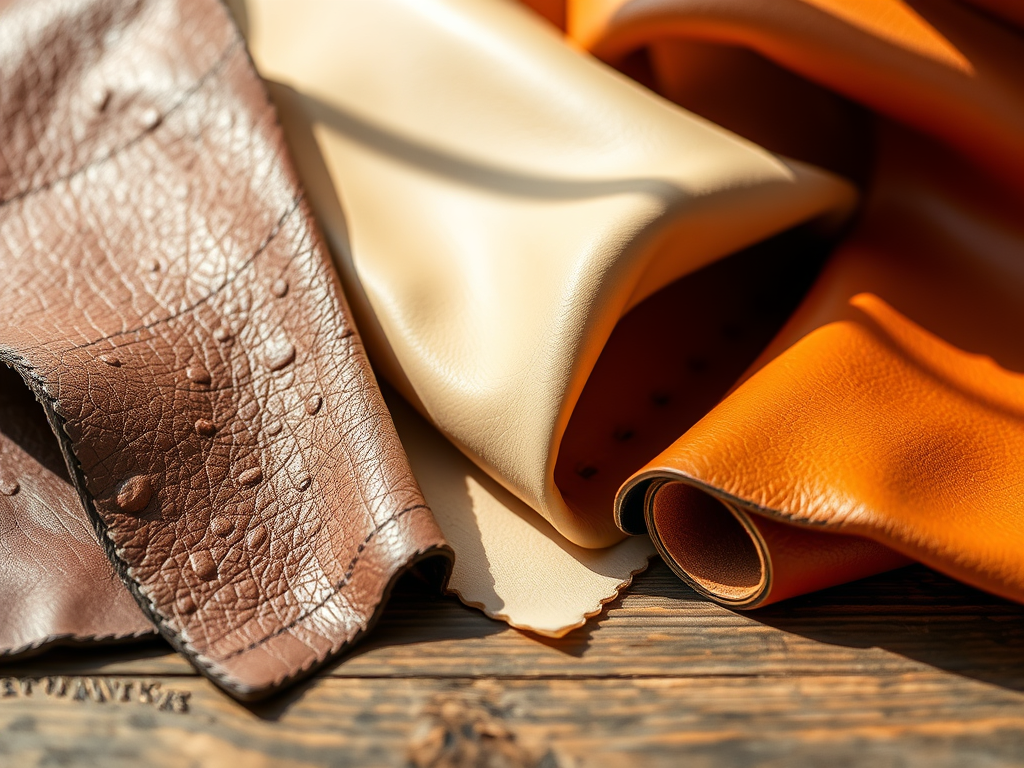
Fast fashion shoes use PU leather, bonded leather, or synthetic fabrics that can’t breathe, can’t be reconditioned, and degrade rapidly. Handcrafted shoes use full-grain cowhide, horsehide, or vegetable-tanned leather — materials that breathe, mould to your feet, develop a rich patina, and can be restored with conditioning.
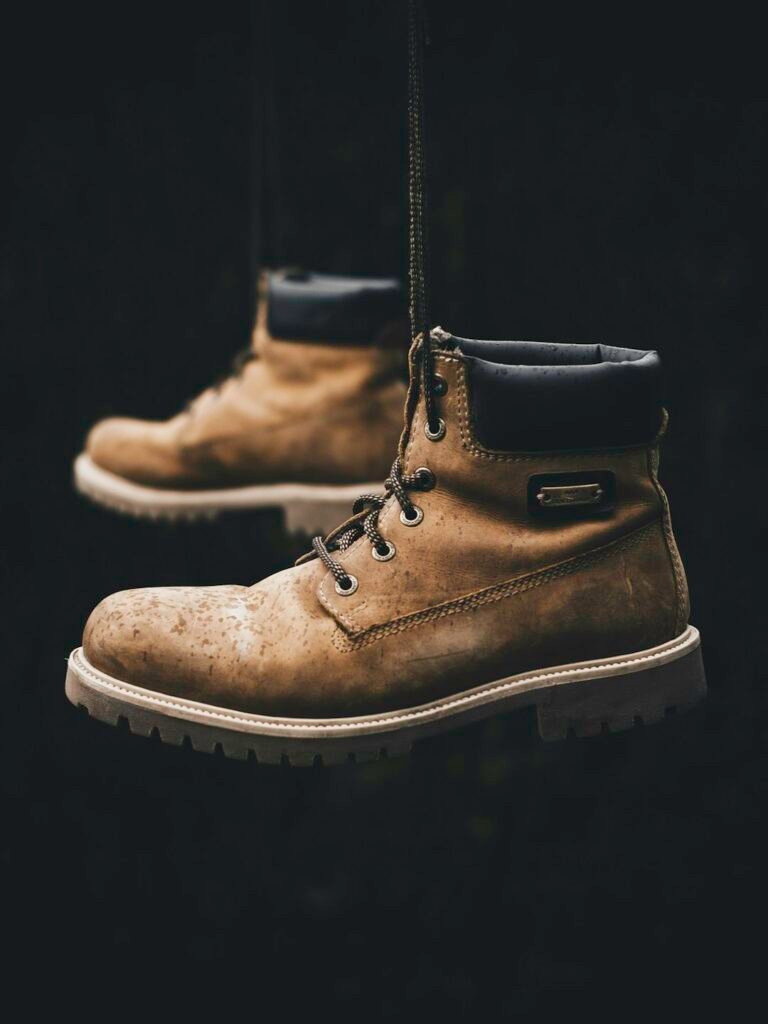
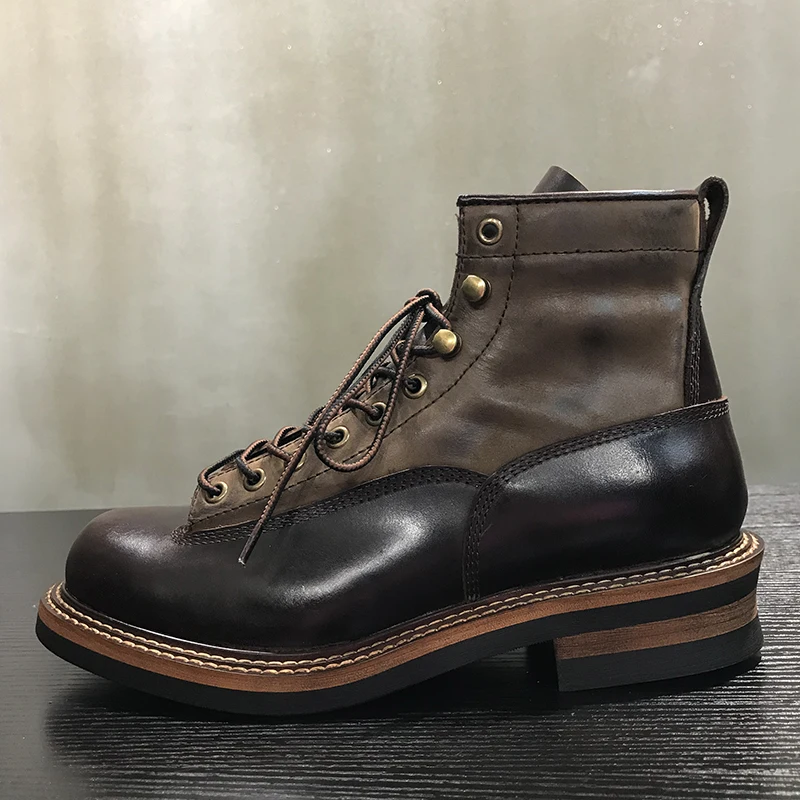
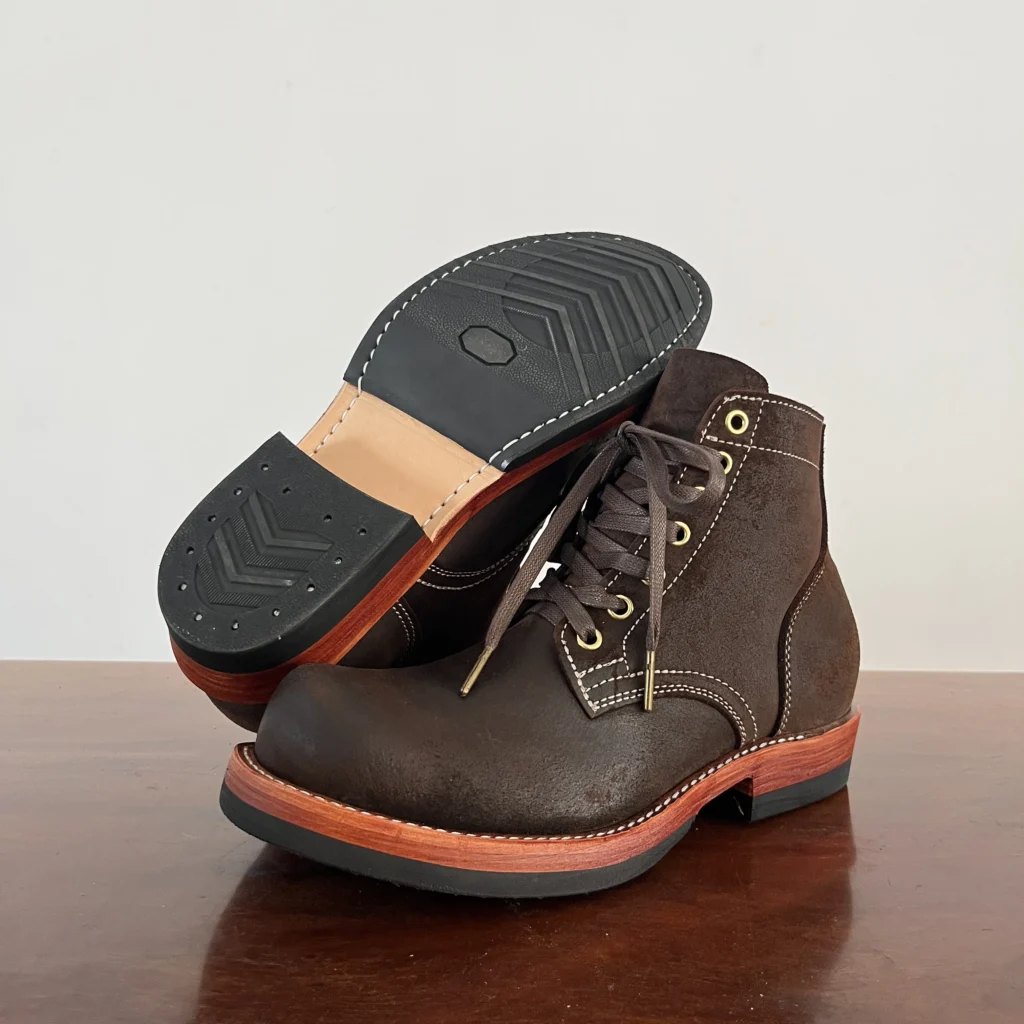
UnityPureMax’s Vintage Distressed Horsehide Sneakers and Goodyear Handmade Horse Leather Boots are perfect examples — horsehide is denser and more durable than standard cowhide, and it only gets better with age.
2. Stitched vs glued construction
Most cheap shoes are glued together — the sole is simply bonded to the upper with adhesive. When the glue fails (and it always does), the shoe is done. Handcrafted shoes use stitched construction methods like Goodyear welt, Blake stitch, or hand-stitched techniques where the sole is sewn to the upper. This means they can be resoled multiple times, extending their life by decades.
Our Goodyear Welt Suede Derby Boots exemplify this — when the sole wears out, a cobbler can replace it without touching the upper, giving you essentially a new pair of boots.
3. Attention to detail and finishing
Handcrafted shoes have visible quality markers: tight, even stitching; burnished edges; thoughtful lining choices; and hand-applied finishes. Mass-produced shoes cut corners everywhere — uneven stitching, rough edges, cheap plastic eyelets, thin insoles. The difference is immediately apparent when you hold both side by side.
Why Vintage-Inspired Leather Shoes Are Trending in NZ 2026
Vintage leather shoes NZ aren’t just nostalgic throwbacks — they represent a design philosophy that modern footwear has largely abandoned: shoes built to be worn hard, repaired often, and kept for life.
The appeal of square-toe designs
Square-toe shoes — popularised in the 1990s and early 2000s — are back in a big way in 2026. Unlike the exaggerated chisel-toe styles of that era, today’s square-toe leather shoes are more refined: a gently squared shape that’s comfortable, distinctive, and pairs beautifully with both tailored trousers and denim.
UnityPureMax’s vintage square-toe designs, crafted from horsehide and cowhide, tap into this aesthetic while maintaining the construction quality that defines handcrafted footwear.
Timeless over trendy
Fast fashion thrives on churn — this season’s must-have sneaker becomes next season’s clearance bin filler. Vintage-inspired handcrafted shoes reject that cycle. A pair of brown leather Derby shoes or genuine leather loafers looks as good in 2026 as they will in 2036. That’s not boring — that’s confidence.
The “buy less, buy better” movement in NZ
New Zealanders are becoming more conscious of consumption. The rise of op shops, vintage stores, and repair cafes in Auckland, Wellington, and Christchurch signals a cultural shift. People want to own fewer things of higher quality — things they can repair, things that tell a story, things that don’t need replacing every year.
Handcrafted leather shoes fit perfectly into this mindset. They’re an investment piece you buy once and wear for decades.
The Environmental Case for Quality Leather Shoes
It might seem counterintuitive, but quality leather footwear is often more environmentally responsible than cheap synthetic alternatives — when you factor in lifespan.
Leather is biodegradable (synthetics aren’t)
Genuine leather — especially vegetable-tanned leather like that used in our Vegetable-Tanned Leather Riding Boots — is a natural material that biodegrades. PU leather, synthetic mesh, and foam midsoles do not. They break down into microplastics that persist in soil and water for centuries.
Longevity matters more than material
A synthetic shoe that lasts 2 years and ends up in landfill has a higher per-wear environmental impact than a leather shoe that lasts 20 years. Yes, leather production has an environmental footprint — but when spread across decades of wear, it’s far lower than repeatedly manufacturing and discarding cheap shoes.
Repairability extends life further
Handcrafted leather shoes can be resoled, restitched, and reconditioned. Synthetic shoes cannot. Once the glue fails or the foam compresses, they’re trash. This repairability is why cobblers still exist — and why investing in repairable footwear makes environmental sense.
What to Look For in Handcrafted Leather Shoes NZ
Not every “handcrafted” or “artisan” label is genuine. Here’s what actually matters when shopping for quality leather footwear in New Zealand.
1. Specific leather type listed
If a product just says “leather” or “high-quality leather,” be sceptical. Trustworthy brands specify the exact leather: full-grain cowhide, horsehide, vegetable-tanned leather, lambskin. UnityPureMax labels every product with its precise leather type so you know exactly what you’re buying.
2. Goodyear welt or Blake stitch construction
These construction methods mean the shoe is resolable. If a brand doesn’t mention how the sole is attached, assume it’s glued (and therefore not repairable). Our Goodyear handmade boots are built this way specifically so they can be resoled multiple times.
3. Visible stitching and craftsmanship details
Look at product photos closely. Can you see the stitching? Are the edges finished cleanly? Does the leather look substantial (not paper-thin)? Quality footwear doesn’t hide its construction — it showcases it.
4. A realistic price point
Handcrafted full-grain leather shoes cost more than fast fashion because they cost more to make. If you see “handmade Italian leather boots” for $80, they’re neither handmade nor Italian leather. Genuine handcrafted footwear in NZ typically starts around $150–$200 and goes up from there depending on leather type and construction complexity.
How to Care for Handcrafted Leather Shoes (So They Last Decades)
Quality shoes reward care. The good news: caring for handcrafted leather footwear is easier than most people think.
- Clean regularly — brush off dirt after every wear. Deep clean with leather cleaner every few weeks.
- Condition every 4–6 weeks — use a quality leather conditioner to keep the leather supple and prevent cracking.
- Waterproof for NZ winters — treat with a waterproofing spray or wax before wet weather hits. Reapply monthly in winter.
- Use shoe trees — cedar shoe trees absorb moisture and help shoes hold their shape between wears.
- Rotate your shoes — don’t wear the same pair every day. Leather needs time to dry and recover between wears.
- Resole when needed — when the sole wears thin, take them to a cobbler. A $60 resole extends the life by 5+ years.
With this level of care, handcrafted leather shoes can easily last 15–25 years. Some people pass them down to the next generation.
The True Cost of Cheap vs Quality Footwear
Let’s do the math on what footwear actually costs over a decade in New Zealand:
| Fast Fashion Shoes | Handcrafted Leather Shoes | |
|---|---|---|
| Initial cost | $70 | $250 |
| Lifespan | 18 months | 15+ years |
| Pairs needed over 15 years | 10 pairs | 1 pair (+ 2 resoles at $60 each) |
| Total cost over 15 years | $700 | $370 |
| Cost per year | $47 | $25 |
| Environmental impact | 10 pairs in landfill | 2 old soles composted |
Handcrafted leather shoes are cheaper in the long run, better for the environment, and look exponentially better as they age. The only “expensive” part is the upfront cost — but that’s an illusion. You’re prepaying for 15 years of footwear instead of buying it in expensive installments.
Why Choose UnityPureMax for Handcrafted Leather Shoes?
At UnityPureMax, we’re committed to the principles that make handcrafted footwear worth buying: genuine materials, repairable construction, and designs that transcend trends.
Every pair — from our horsehide sneakers to our vegetable-tanned riding boots — is made from full-grain or top-grain leather clearly labelled by type. We use Goodyear welt construction wherever possible so your shoes can be resoled. And we design with vintage-inspired aesthetics that won’t look dated in five years.
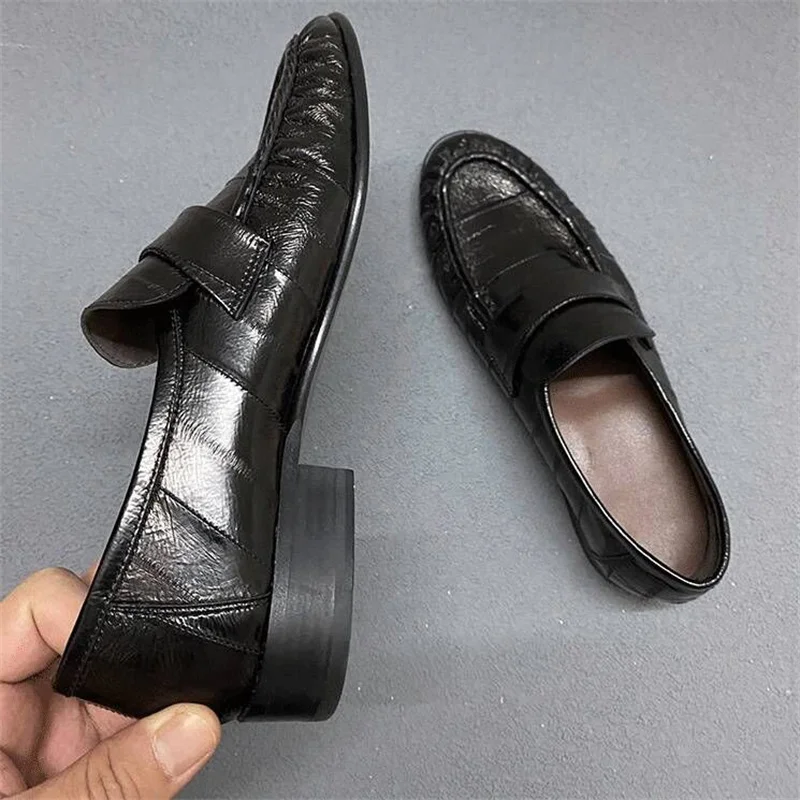
Whether you’re after handmade Derby shoes, genuine leather loafers, or Goodyear welt boots, you’re investing in footwear that improves with every wear — not disposable fashion that falls apart after a season.
Browse the full UnityPureMax collection and discover what it means to own shoes that are built to last.