🎉 Free Shipping on Orders Over $100 | ✨ New Arrivals Just Added


Best Handcrafted Leather Work Boots for Men: A Buyer’s Guide

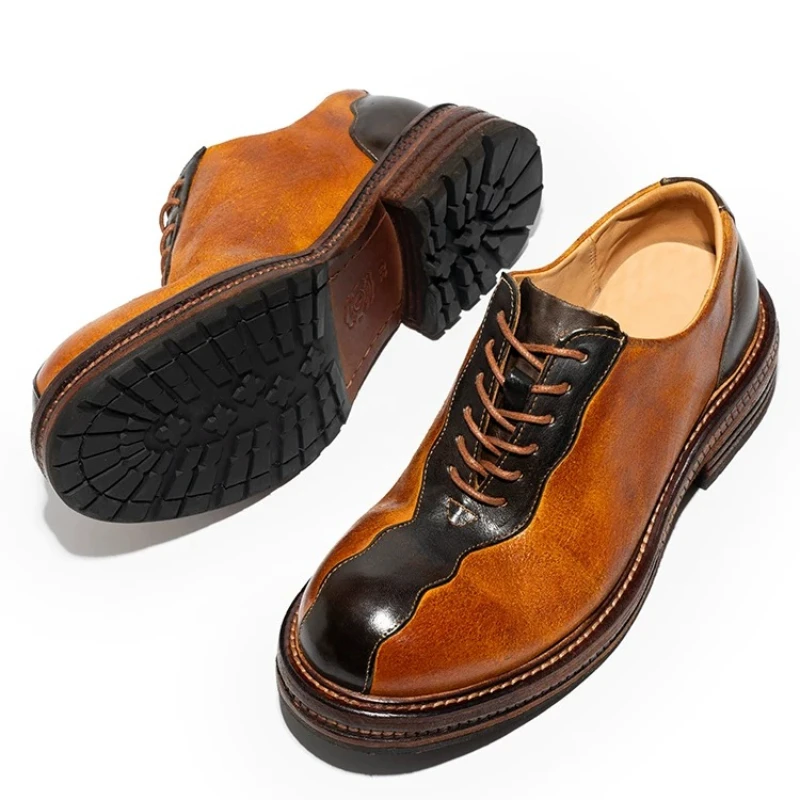
Best Handcrafted Leather Work Boots for Men: A Buyer’s Guide
The best handcrafted leather work boots for men aren’t the ones with the most marketing behind them — they’re the ones built with construction methods that hold up to years of daily wear, resoling, and real physical work. At UNITYPUREMAX™, we build work boots the way they were built before “handcrafted” became a marketing word: full-grain leather, Goodyear welt construction, and a last shaped for how a foot actually moves through a workday, not how it looks on a shelf.
Most guides to buying work boots focus on brand names. This one focuses on what actually determines whether a pair survives five years of real use or falls apart in five months.
What “Handcrafted” Actually Means in a Work Boot
The word “handcrafted” gets used loosely across the footwear industry, often to describe boots that are still largely machine-assembled with a few hand-finishing touches at the end. A genuinely handcrafted work boot involves hand-lasting (shaping the leather over the boot form by hand rather than by machine press), hand-stitched welting, and hand-applied finishing and burnishing on the leather itself. This isn’t a cosmetic distinction — hand-lasted leather conforms more precisely to the last’s shape, which affects fit, and hand-stitched welts are typically more consistent and repairable than machine-stitched equivalents when a boot eventually needs resoling.
When evaluating any work boot marketed as handcrafted, ask what specifically is done by hand versus machine. A boot with genuinely hand-applied leather burnishing will show natural, slightly uneven color depth rather than a uniform sprayed finish — a visual cue that’s easy to check before buying.
Construction: The Single Biggest Factor in Boot Longevity
Construction method matters more than leather quality alone, because it determines whether a boot can be repaired or has to be replaced once the sole wears out.
Goodyear welt construction stitches a welt (a strip of leather) to both the upper and a leather or fiber midsole, with the outsole then stitched to that welt. This creates a boot that can be resoled repeatedly over its lifetime — often for decades — without disturbing the upper. It’s more labor-intensive and expensive to produce than the alternatives, which is why it’s largely disappeared from mass-market work boots.
Cemented (glued) construction bonds the outsole directly to the upper with adhesive. It’s cheaper and faster to produce, but once the adhesive bond fails or the sole wears through, the boot generally can’t be resoled — it gets replaced. This is the dominant construction method in big-box work boots.
Blake stitch construction sews through the insole, upper, and outsole in a single stitch line visible from inside the boot. It allows for resoling and produces a slimmer profile than Goodyear welt, but is less water-resistant since the stitch line penetrates straight through the sole.
For genuine work use — standing on wet concrete, walking uneven ground, repeated flexing through a full shift — Goodyear welt construction remains the standard workers who plan to keep one pair for years actually choose, because the ability to resole is what makes the higher upfront cost pay off over time.
Leather Quality: Full-Grain vs. the Alternatives
Full-grain leather uses the complete top layer of the hide, including the natural grain, without sanding or buffing away imperfections. It’s the strongest, most durable leather grade available, and it develops a patina over years of wear rather than cracking or peeling. Top-grain leather has the outermost layer sanded away and is thinner and less durable, though it’s often marketed as premium. Genuine leather and bonded leather sit further down the quality scale and are common in budget work boots — they wear out significantly faster and don’t hold up to repeated flexing and moisture exposure the way full-grain does.
Checking leather grade before buying is worth the extra few minutes: full-grain leather will show visible natural texture, small imperfections, and grain variation. Leather that looks perfectly uniform across every pair on a shelf has usually been corrected or coated, which affects both durability and how the boot ages.
Fit and Last Shape for All-Day Work
A work boot last (the foot-shaped mold the boot is built around) should account for how feet actually swell and move during a full shift of standing or walking, not just how they measure at rest. A last that’s too narrow through the forefoot causes fatigue and numbness well before the workday ends; one with too much room in the heel causes blistering from friction.
Break-in period matters here too. Genuinely full-grain leather work boots typically require one to two weeks of graduated wear to fully mold to the foot — wearing them for short periods initially rather than a full shift on day one prevents the blistering that gives handcrafted boots an undeserved reputation for discomfort.
What to Look For When Buying
A few checks separate a work boot built to last from one that only looks like it:
- Welt visible around the sole edge — a small ridge of stitched leather where the upper meets the sole indicates Goodyear welt construction rather than cemented.
- Full-grain leather with visible natural texture, not a uniform, plastic-like sheen.
- Steel or reinforced shank in the midsole for arch support during long periods of standing.
- Reinforced stitching at high-stress points — toe box, heel counter, and eyelets.
- A stated resoling service from the maker, which signals genuine welt construction and long-term support.
Explore our Men’s Work Boots → collection, built on true Goodyear welt construction with full-grain leather, or compare across our full Men’s Boots → range including engineer and motorcycle styles for different work environments.

Why Choose UNITYPUREMAX™
We build work boots the way the category used to be built before mass production took over: full-grain leather, hand-lasted, Goodyear welted, and finished by artisans who treat a work boot with the same seriousness as a dress shoe. Every pair is made to be resoled rather than replaced, which is the actual test of whether “handcrafted” means anything or is just a word on a product page.
Frequently Asked Questions
1. What makes a work boot “handcrafted” rather than just leather? Genuine hand-crafting involves hand-lasting, hand-stitched welting, and hand-applied finishing — not just leather uppers assembled on a machine line.
2. Is Goodyear welt construction worth the extra cost for work boots? Yes, if you plan to keep the boots long-term. Welted boots can be resoled repeatedly, often making them cheaper per year of use than replacing cemented boots every year or two.
3. How long should full-grain leather work boots last? With proper care and periodic resoling, well-built full-grain leather work boots can last a decade or more.
4. How long does it take to break in handcrafted leather work boots? Typically one to two weeks of graduated wear, starting with shorter periods and building up to full shifts.
5. Can work boots be resoled, and how do I know if mine can be? Boots with Goodyear welt or Blake stitch construction can be resoled. Check for a visible welt ridge around the sole edge, or ask the maker directly.
6. What’s the difference between full-grain and top-grain leather? Full-grain uses the complete top layer of the hide with natural grain intact; top-grain has that layer sanded away, making it thinner and less durable over time.
7. Do handcrafted work boots require more maintenance than standard work boots? Slightly — full-grain leather benefits from periodic conditioning — but the payoff is a boot that lasts years longer with basic care.
8. What should I check before buying work boots online? Look for stated leather grade (full-grain specifically), visible welt construction, reinforced stitching at stress points, and a resoling service offered by the maker.
9. Are handcrafted leather work boots worth it for everyday work use? Yes, for anyone who wears work boots regularly and values not replacing them annually — the total cost of ownership is often lower than repeatedly buying budget boots.
10. How do I care for full-grain leather work boots? Clean off dirt and debris after each use, condition every few months depending on use frequency, and let boots fully dry away from direct heat after wet conditions.
Ready for Boots Built to Outlast the Job
Explore the full Men’s Work Boots → collection at UNITYPUREMAX™, built on true Goodyear welt construction with full-grain leather for work that doesn’t stop at the end of a shift.