🎉 Free Shipping on Orders Over $100 | ✨ New Arrivals Just Added


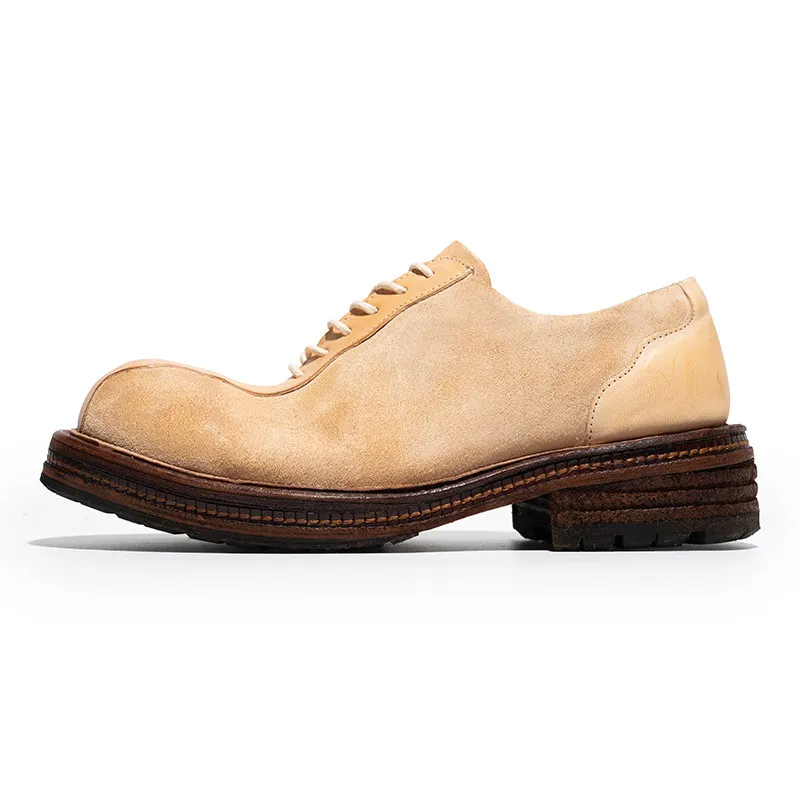
Best Handcrafted Exotic Leather Boots for Men: Beyond the Standard Work Boot

Best Handcrafted Exotic Leather Boots for Men: Beyond the Standard Work Boot
Most guides to the best handcrafted leather boots for men point you toward the same handful of mass-market names — Red Wing, Wolverine, Thursday Boot — all building solid boots on standard cowhide. That’s a crowded conversation, and it’s not one that says much about what handcrafted actually means at the top of the category. At UNITYPUREMAX™, we build men’s boots on the same Goodyear welt construction those brands are known for, but extend it into materials most of them never touch: crocodile, ostrich, hair-on leathers, and the tabi split-toe silhouette.
This guide covers what actually separates a genuinely handcrafted boot from a mass-produced one — and why exotic leather and tabi construction represent a higher tier of that standard, not a novelty version of it.
Why Standard Work Boot Comparisons Miss the Point
Typical “best work boots” roundups compare price, comfort, and basic durability across boots built on nearly identical materials — full-grain cowhide, Goodyear welt or cemented construction, similar lasts. Once you’ve read three of these guides, you’ve read all of them, because the underlying products aren’t meaningfully different from each other.
The real differentiation in handcrafted leather boots happens above that tier — in the material itself, and in silhouettes that require more skill to execute correctly. A boot built from crocodile or ostrich leather isn’t just a cowhide boot with a different hide swapped in; the tanning, cutting, and lasting process changes to accommodate the material’s natural characteristics. A tabi boot isn’t a standard boot with a split toe added on — the entire last is shaped differently to support that structure. Evaluating handcrafted quality at this level means asking different questions than a standard work boot guide would.
What Sets Exotic Leather Boots Apart Structurally
Crocodile leather requires hand-matching scale patterns across the cut pieces of a boot so the natural pattern flows continuously rather than looking mismatched at the seams — a step that doesn’t exist when working with uniform cowhide. Ostrich leather has raised quill-point follicles that must be handled carefully during lasting to avoid flattening the texture that makes the material valuable in the first place. Hair-on leathers like zebra and pony require an entirely different lasting approach, since the material behaves more like a natural textile than a conventional tanned hide.
Each of these materials demands more from the maker than standard cowhide does — more careful hide selection, more hand-matching, more precise lasting. That difficulty is part of why almost no DTC boot brand offers it: it’s genuinely harder to execute well, which is exactly why it’s a better signal of real craftsmanship than a standard leather work boot.
Tabi Construction: A Different Kind of Handcrafted Skill
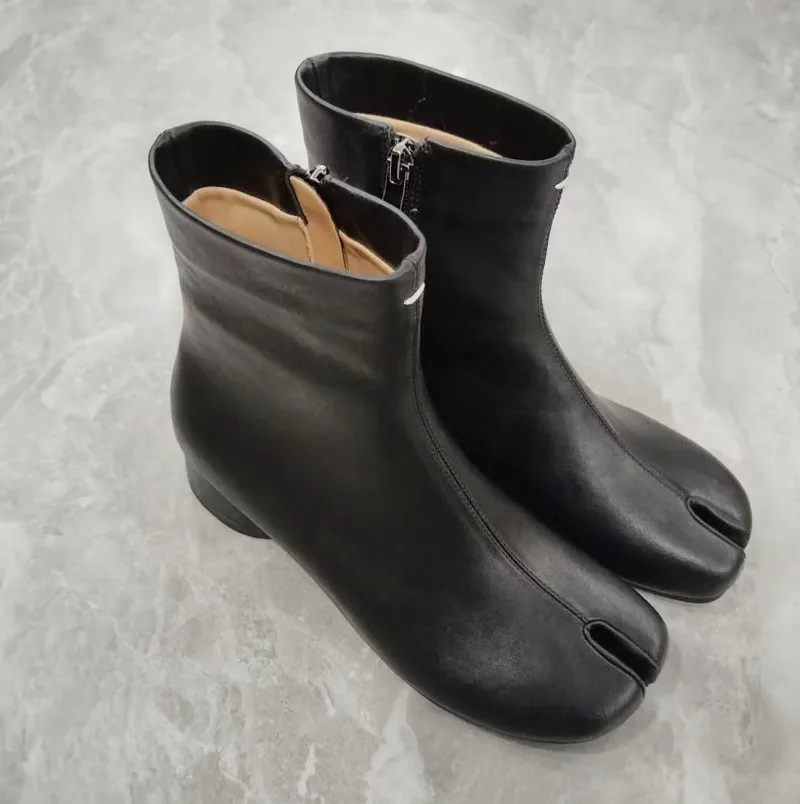
The tabi silhouette — a split-toe last rooted in traditional Japanese tabi socks — requires a fundamentally different last shape than a standard round or pointed toe boot. Getting the split-toe fit right, so it separates the big toe without creating pressure points or an awkward walking gait, takes more iterative last development than a standard boot silhouette. Most work boot makers have never built on this last at all, because it falls outside the category they’ve optimized production around.
Combined with Goodyear welt construction, a tabi boot represents the same durability standard as any premium work boot — hand-lasted, resoleable, full-grain leather — applied to a shape that takes more skill to execute correctly. See the full range in Men’s Tabi Boots →.
Construction Still Matters — Regardless of Material
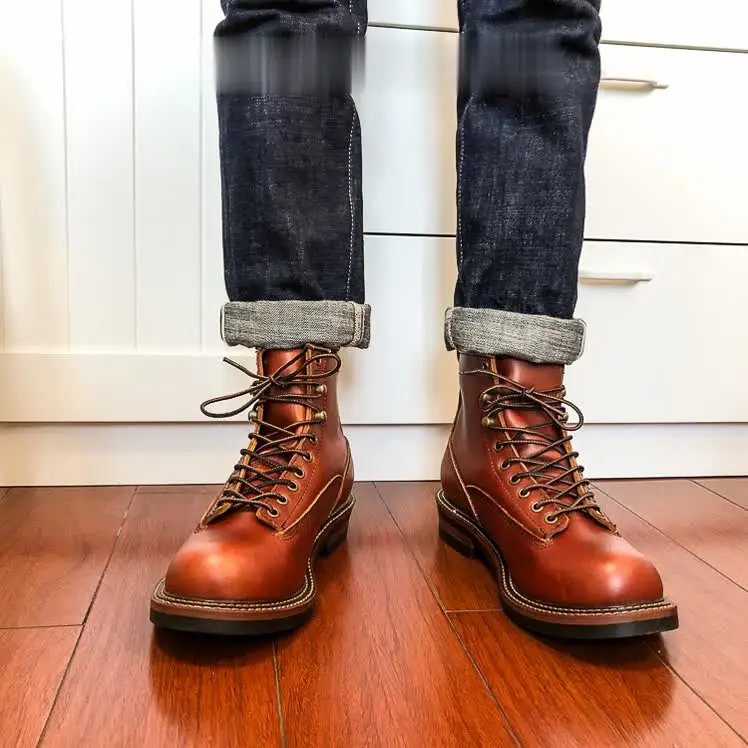
None of this replaces the fundamentals. A crocodile boot glued together with cemented construction is still a boot that can’t be resoled once the sole wears out, exotic leather or not. Every UNITYPUREMAX™ boot — standard leather, exotic, or tabi — is built on genuine Goodyear welt construction, hand-stitched with a visible welt around the sole edge and a resoling service to back it. For a full breakdown of why this matters, see our guide on Goodyear welt vs. cemented construction →. Material sets the ceiling on how distinctive a boot can be; construction determines whether it’s actually built to last.
What to Look for in a Genuinely Handcrafted Exotic Leather Boot
A few checks matter more here than in a standard work boot search: confirm the leather is genuine exotic hide, not embossed cowhide made to look like crocodile or ostrich — genuine exotic leather has natural, non-repeating texture variation, while embossed leather shows a repeating pattern. Ask whether the scale or quill pattern is hand-matched across seams, a detail that separates careful construction from assembly-line work. And confirm Goodyear welt construction specifically — exotic leather doesn’t compensate for cemented construction that can’t be resoled.
Explore Men’s Tabi Boots →, Men’s Boots →, and see the material story behind our crocodile, ostrich, and hair-on lines in our Exotic Leather Care Guide →.
Why Choose UNITYPUREMAX™
We build the same way whether the material is standard full-grain cowhide or crocodile: hand-lasted, Goodyear welted, and finished by artisans who treat the construction as seriously as the leather. What changes with exotic materials and the tabi last isn’t our standard — it’s the level of skill required to meet it.
Frequently Asked Questions
1. What makes exotic leather boots harder to make than standard leather boots? Materials like crocodile and ostrich require hand-matching natural patterns across seams and more careful handling during lasting than uniform cowhide.
2. Is embossed leather the same as genuine exotic leather? No. Embossed leather is cowhide stamped with a pattern to mimic exotic leather, and shows a repeating pattern rather than the natural, non-repeating texture of genuine exotic hide.
3. Does exotic leather affect a boot’s durability? Not negatively when properly tanned and constructed — the construction method (Goodyear welt vs. cemented) affects durability more than the leather type itself.
4. What is tabi construction and why does it require different skill? Tabi boots use a split-toe last that separates the big toe, requiring different last development than a standard round or pointed toe silhouette.
5. Can exotic leather boots be resoled like standard leather boots? Yes, if built on genuine Goodyear welt construction — the material doesn’t affect resoling capability, the construction method does.
6. How do I know if crocodile or ostrich leather is genuine? Genuine exotic leather shows natural, non-repeating texture and pattern variation. A perfectly repeating pattern indicates embossed cowhide.
7. Are tabi boots as durable as standard work boots? Yes, when built on the same Goodyear welt construction and full-grain leather standard — the silhouette doesn’t change the underlying durability factors.
8. Why don’t more brands offer exotic leather or tabi boots? Both require more specialized skill and hand-matching than standard cowhide boots on a standard last, which limits how many makers offer them well.
9. What should I check before buying an exotic leather boot online? Confirm genuine (not embossed) exotic leather, hand-matched patterning at seams, and true Goodyear welt construction with resoling available.
10. Is a hair-on leather boot as durable as a standard leather boot? The underlying construction can be equally durable, though hair-on leather requires different, gentler care than standard leather to preserve the coat.
See the Difference in Person
Explore Men’s Tabi Boots → and the full exotic leather collection at UNITYPUREMAX™ — Goodyear welt construction applied to materials and silhouettes most handcrafted boot makers never attempt.